Why the Topcoat Is the Most Important Layer of Your Floor Coating
Discover why topcoats are crucial for floor coatings. Learn about UV-stable finishes and how Sparks Coatings protects your Utah garage for decades.
What a Topcoat Actually Does
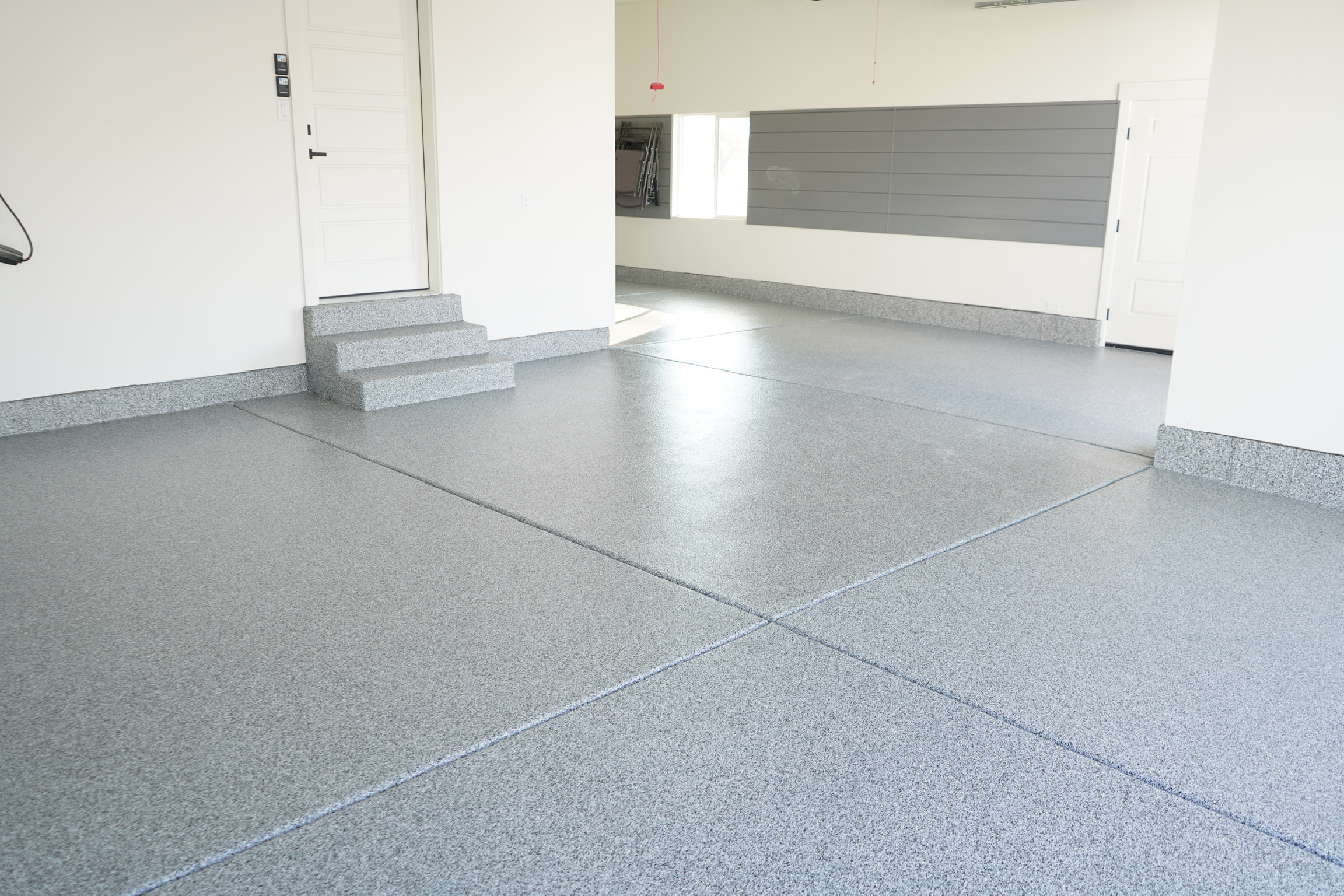
Most homeowners think of a floor coating as a single layer — you put it down, it hardens, you're done. In reality, a professional floor coating system is a carefully engineered stack of layers, each serving a distinct purpose. The base coat provides the adhesion and color. The broadcast layer (flake or chip) adds texture, depth, and slip resistance. But the topcoat is the layer that actually faces the world — and in many ways, it's the most important layer of all.
The topcoat is the clear (or tinted) protective finish applied over the base coat and broadcast. Its job is to seal the system together, protect everything beneath it, and determine how the floor performs day to day for years to come. A weak topcoat means a floor that yellows in months, picks up hot tire marks, scratches easily, and fails well before its time. A premium topcoat means a floor that looks showroom-fresh a decade from now.
The Four Critical Functions of a Topcoat
1. UV Stability
Utah gets approximately 300 days of sunshine per year. Garage doors open and close, letting in direct sunlight that hits the floor daily. Most epoxy-based coatings — including the topcoats on many "polyurea" systems sold by lower-tier contractors — are not UV-stable. They contain aromatic compounds that break down under UV exposure, causing the topcoat to yellow, amber, or chalk within months.
UV-stable topcoats use aliphatic chemistry — a more expensive formulation that resists UV degradation and retains its clarity and gloss for years. The difference in price between aromatic and aliphatic topcoats is meaningful, which is exactly why many contractors cut corners here. You won't see it on day one. You'll see it at month six.
2. Chemical Resistance
A garage floor faces a constant assault of chemicals: motor oil, brake fluid, transmission fluid, antifreeze, road salt, deicing agents, fertilizer, battery acid, and household cleaners. A high-quality topcoat creates a chemically resistant barrier that prevents these substances from penetrating the system and reaching the concrete below.
Without adequate chemical resistance, oil stains will seep through the topcoat and create permanent discoloration. Road salt — particularly brutal in Utah winters — will work its way in and accelerate delamination at joints and edges.
3. Abrasion Resistance
Vehicle tires are tough on floors. Dragging boxes, dropping tools, rolling shop equipment — a residential garage takes a surprising amount of mechanical abuse. The topcoat's hardness (measured in Shore D durometer) determines how well it holds up to all of this. Soft topcoats scratch and scuff easily, creating a floor that looks worn within a few years even if the underlying system is still intact.
Premium topcoats also resist hot tire pickup — a phenomenon where the heat from recently driven tires softens a low-quality topcoat just enough to create suction, pulling up the coating when the vehicle is moved. If you've seen a coating system with tire-shaped patches missing, that's hot tire pickup at work.
4. Gloss Retention
The gloss level of your topcoat is what gives a coated floor its distinctive showroom appearance. A premium topcoat maintains its sheen year after year. Budget topcoats go dull and hazy within 12–18 months as the surface microscopically degrades.
Topcoat Types Compared
Epoxy Clear Coat
Traditional epoxy clears are inexpensive and widely used in DIY kits and budget installs. They provide basic protection but are almost always aromatic — meaning they yellow and chalk under UV. They also have moderate abrasion resistance and are prone to hot tire pickup when the formula isn't optimized.
Polyaspartic Topcoat
Polyaspartic is a type of polyurea that has become the dominant topcoat choice for professional floor coating contractors. It's UV-stable, extremely hard, chemical-resistant, and cures fast — allowing for same-day full return to service. A quality polyaspartic topcoat applied correctly will outlast an epoxy clear by years in real-world conditions. This is what Sparks Coatings uses.
Polyurea Topcoat
Pure polyurea topcoats are extremely durable but require specialized equipment and expertise to apply correctly. Their very fast cure time can be a challenge — they can set in under a minute in high temperatures, making consistent application difficult. Polyaspartic (which is technically a subset of polyurea chemistry) was developed specifically to solve this workability problem while retaining the performance benefits.
The Utah Factor: Why Topcoat Choice Matters Even More Here
Utah's climate creates a uniquely demanding environment for floor coatings. Salt Lake City sees summer temperatures regularly exceeding 100°F, while winter nights drop well below freezing. Freeze-thaw cycles cause concrete to expand and contract — and any coating system that can't flex with it will crack.
Additionally, Utah's intense sun and high altitude UV exposure accelerates the breakdown of aromatic topcoats faster than in cloudier, lower-elevation climates. A topcoat that might last 3 years in Seattle might yellow and fail in 12 months in St. George or the Salt Lake valley.
Road salt use is extensive through Utah winters, and road salt is one of the most corrosive substances a floor coating regularly encounters. A premium topcoat with strong chemical resistance is not optional in Utah — it's a necessity.
Questions to Ask Your Coating Contractor
Before signing any contract, ask these questions about the topcoat:
- "Is your topcoat aliphatic or aromatic?" If they don't know the answer, that's telling.
- "Is it UV-stable?" Get this in writing if possible.
- "What is the Shore D hardness of the topcoat?" Quality topcoats are typically 60+ Shore D.
- "Does it resist hot tire pickup?" Any reputable contractor should be able to answer this confidently.
- "What is the topcoat's thickness?" Adequate topcoat thickness (typically 4–6 mils dry) is essential for durability.
The Sparks Coatings Topcoat
We use a premium UV-stable polyaspartic topcoat on every installation. It's an aliphatic formulation that resists yellowing, withstands Utah's temperature extremes, and provides exceptional abrasion and chemical resistance. It's not the cheapest option — but it's what's required to back our lifetime warranty.
We apply it at proper thickness in controlled conditions, and we don't rush the cure time. The result is a floor that looks just as good at year five as it did on installation day.
To understand the full picture of what goes into a lasting installation, see our post on why surface preparation is the most important step. And if you want to keep your new floor looking perfect, read our guide on how to clean and maintain a coated floor.
Frequently Asked Questions
How long does a polyaspartic topcoat last?
A quality polyaspartic topcoat applied over a properly prepared surface will last 15–20+ years with normal maintenance. Sparks Coatings backs our system with a lifetime warranty.
Will my floor coating yellow in Utah sun?
Not with an aliphatic polyaspartic topcoat. Aromatic epoxy topcoats will yellow — sometimes within months in Utah's intense sun. Always ask your contractor whether their topcoat is UV-stable before committing.
What causes hot tire pickup on coated floors?
Hot tire pickup happens when vehicle tires heat up under braking and the topcoat isn't hard or heat-resistant enough to resist the suction as the tire cools. Premium polyaspartic topcoats with high Shore D hardness prevent this.
Can I add an extra topcoat to an existing floor?
Sometimes, yes — it depends on the condition and chemistry of the existing coating. Contact us for an evaluation. In many cases, re-coating an existing floor is more cost-effective than a full replacement if the base coat is still well-adhered.
Don't settle for a topcoat that fails in two years.
Call us at (385) 469-3410 or request a free quote to learn about the premium system we use on every job.
Get Your Free Quote