
Why Concrete Surface Prep Is the Most Important Step in Floor Coatings
Learn why concrete surface prep is critical before floor coatings. Discover the best preparation methods and what Sparks Coatings does differently.
Why Surface Prep Is Not Optional
If you've ever seen a garage floor coating bubble up, peel at the edges, or flake off in chunks within a year or two, the culprit is almost always the same: inadequate surface preparation. The coating itself may have been perfectly fine — the problem was that it never had a chance to bond properly because the concrete beneath it wasn't ready.
Professional floor coatings are only as strong as the surface they're bonded to. Concrete is naturally porous, but those pores close over time from oil contamination, surface laitance (the weak cement paste layer on top), and years of vehicle traffic. When a coating is applied to a closed or contaminated surface, it sits on top rather than penetrating and locking in. The result is adhesion failure — no matter how premium the coating material.
At Sparks Coatings, surface preparation is not a five-minute step we rush through before the real work begins. It is the real work. We typically spend the majority of an installation day on surface prep alone. Here's everything you need to know about why it matters and what proper prep actually looks like.
The Three Main Surface Preparation Methods
1. Diamond Grinding
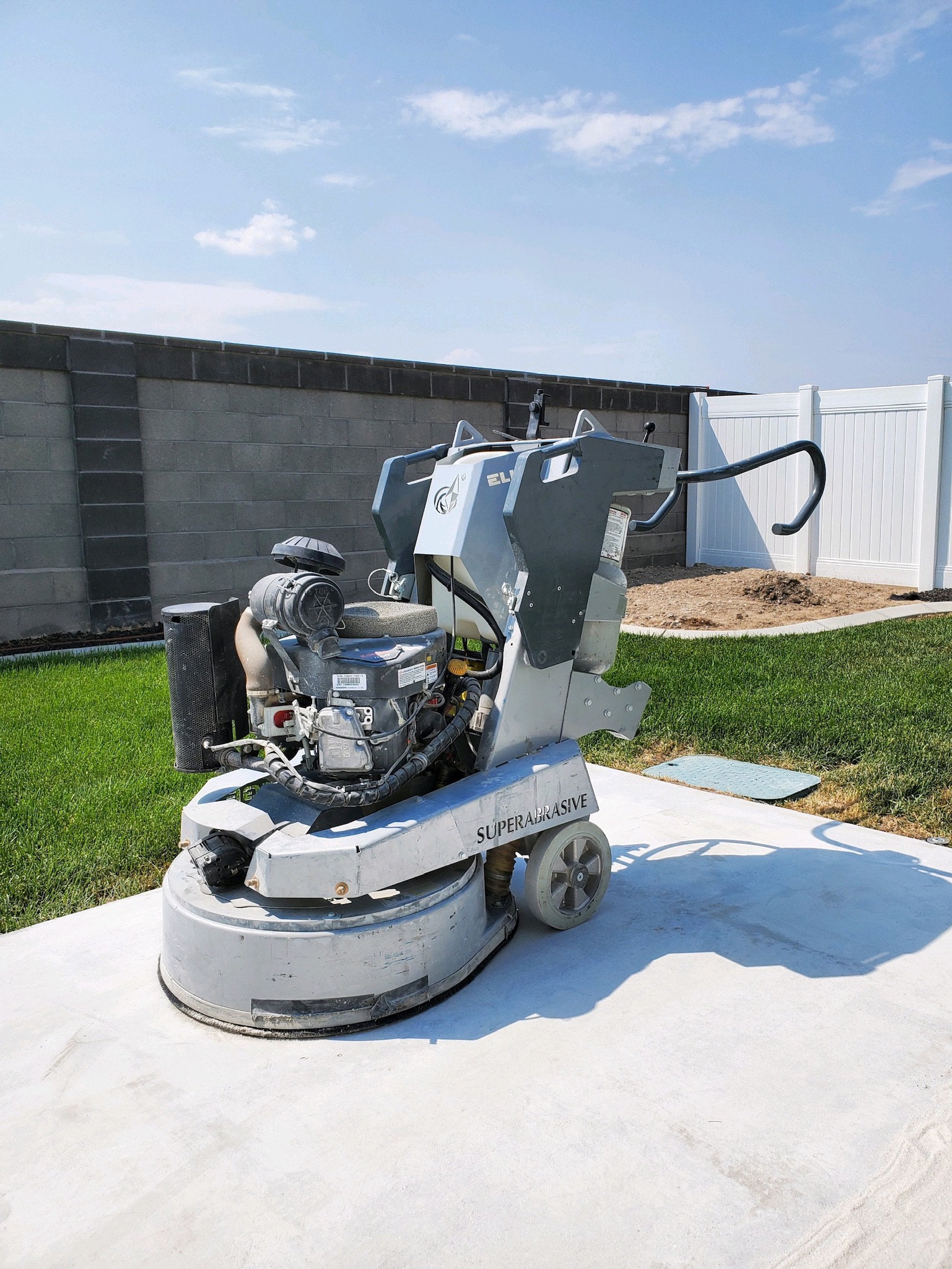
Diamond grinding uses rotating diamond-tipped discs to mechanically abrade the concrete surface. This removes the laitance layer, opens the concrete's pores, and creates a consistent surface profile — measured in CSP (Concrete Surface Profile) numbers — that gives the coating something to grip.
Pros: Creates a highly consistent, open profile. Removes existing coatings, sealers, and contamination. Works on virtually any concrete regardless of condition. Generates minimal dust when paired with a HEPA vacuum (which we always use). Results are predictable and measurable.
Cons: Requires professional-grade equipment — consumer-grade grinders produce inconsistent results. Slower process than acid etching on flat, clean surfaces.
This is the method we use on every single job. Our Superabrasive and Lavina diamond grinders are industrial-grade tools that produce a CSP 2–3 profile, which is the ideal range for professional floor coating adhesion.
2. Shot Blasting
Shot blasting propels small steel beads at high velocity across the concrete surface, creating an aggressive profile. It's common in large commercial applications like warehouses, aircraft hangars, and parking structures.
Pros: Extremely fast on large, open areas. Creates a very aggressive surface profile ideal for thick coatings.
Cons: Equipment is large and impractical for most residential garages. Cannot reach walls, corners, or edges — requiring secondary grinding anyway. Overkill for most residential applications.
3. Acid Etching
Acid etching uses muriatic or phosphoric acid to chemically react with the concrete surface, opening pores and lightly profiling it. It's frequently marketed to DIYers and used by lower-cost contractors.
Pros: Fast and inexpensive.
Cons: Highly variable results depending on concrete porosity. Does not remove existing sealers or coatings. Neutralization and moisture management are critical — if not done correctly, the acid residue interferes with coating adhesion. Ineffective on dense or contaminated concrete. Creates hazardous waste that must be properly disposed of.
We do not use acid etching. On the rare occasion a surface appears clean and ideal, the results of acid etching can be acceptable — but there's simply no reason to take that risk when diamond grinding delivers consistent, measurable results every time.
What Happens When Surface Prep Is Skipped or Done Poorly
The consequences of inadequate surface preparation range from cosmetic to catastrophic. Here's what to watch for:
- Bubbling and blistering: Moisture vapor transmission beneath the coating creates pressure that pushes the coating up from below. This almost always indicates that concrete moisture wasn't tested and managed before application.
- Peeling at edges and seams: Edge work is the hardest to prep properly. If a contractor rushes the edges, that's where the coating will lift first.
- Hot tire pickup: When a floor coating pulls up with hot tires, it's a sign the adhesion was marginal from the start — often caused by an oily or sealed surface that was never properly opened.
- Flaking in traffic areas: Coating that flakes in high-traffic zones didn't bond deeply enough into the concrete. The surface profile was either too smooth or contaminated.
Signs of Poor Surface Preparation
If you're evaluating your current floor or a previous contractor's work, these are red flags:
- The floor feels hollow when you tap it (delamination underneath)
- Visible bubbles or blisters anywhere on the surface
- Coating that's lifting at cracks, control joints, or wall edges
- Inconsistent finish — some areas look fine, others are cloudy or rough
- The coating is less than two years old and already showing wear
Professional Prep vs. DIY: The Real Difference
Most homeowners attempting a DIY floor coating purchase a kit from a home improvement store and apply it to an acid-etched or lightly sanded surface. The kits look appealing, and the price point is hard to argue with. But the results rarely last more than a couple of seasons in a real Utah garage environment.
The fundamental problem is equipment. A professional CSP 2–3 surface profile requires an industrial diamond grinder — not a rented angle grinder, not a box-store sander, and not acid. Without proper equipment, you simply cannot achieve the open, consistent surface that professional coatings require to bond.
Additionally, professional contractors perform moisture testing before installation. High moisture vapor emission rates (MVER) are one of the most common causes of coating failure, and they're completely invisible to the eye. We measure MVER on every job and adjust our approach accordingly.
The Sparks Coatings Difference
Here's what our prep process looks like on every single installation:
- Full surface inspection — We assess cracks, control joints, existing coatings or sealers, oil contamination, and visible moisture issues.
- Crack and joint repair — Active cracks are filled with flexible polyurea crack filler before grinding. This prevents the crack from telegraphing through the finished coating.
- Moisture testing — We test for moisture vapor transmission and adjust our primer selection and application if MVER levels are elevated.
- Industrial diamond grinding — We use Superabrasive and Lavina grinders with HEPA vacuums to achieve a CSP 2–3 profile across the entire floor, including edges.
- Full vacuuming and cleaning — Every particle of concrete dust is removed before any coating is applied. Dust is the enemy of adhesion.
- Primer application — A penetrating primer is applied to seal the prepared surface and provide an additional adhesion layer for the base coat.
Only after all of these steps are complete do we apply the first coat of material. For more detail on our services, visit our floor coating services page or read about why the topcoat matters just as much.
Frequently Asked Questions
What is the best method to prepare concrete for floor coating?
Diamond grinding is the industry gold standard for residential and commercial floor coating preparation. It creates a consistent, measurable surface profile and removes contamination that acid etching cannot.
How long does surface prep take for a two-car garage?
For a standard two-car garage, diamond grinding and prep typically takes 3–5 hours. On our 1-day installations, prep takes the majority of the day — coating application is actually the faster part.
Can you coat over an existing epoxy or paint?
It depends on the condition and adhesion of the existing coating. We test it first. If it's well-adhered, we can grind over it and coat on top. If it's failing, it must be fully removed before we apply anything new.
Does Sparks Coatings use acid etching?
No. We exclusively use industrial diamond grinding on every project. It produces more consistent, measurable results than acid etching and eliminates the variables that cause coating failures.
Want a floor that actually lasts?
The prep work is what separates a 2-year floor from a lifetime floor. Call us at (385) 469-3410 or get a free quote online.
Get Your Free Quote